







Recombinant Protein Labeling Service
I. Service Overview
Protein labeling technology is a technique that attaches substances that are both easy to detect and highly sensitive to specific antigen or antibody molecules. The signal enhancement and amplification effects of these labels can reveal the properties and levels of antigens or antibodies in immune reaction systems. This technology has been used in analytical research and technical assays in fields such as medical pathology, immunohistochemistry, molecular biology,and biopharmaceuticals.
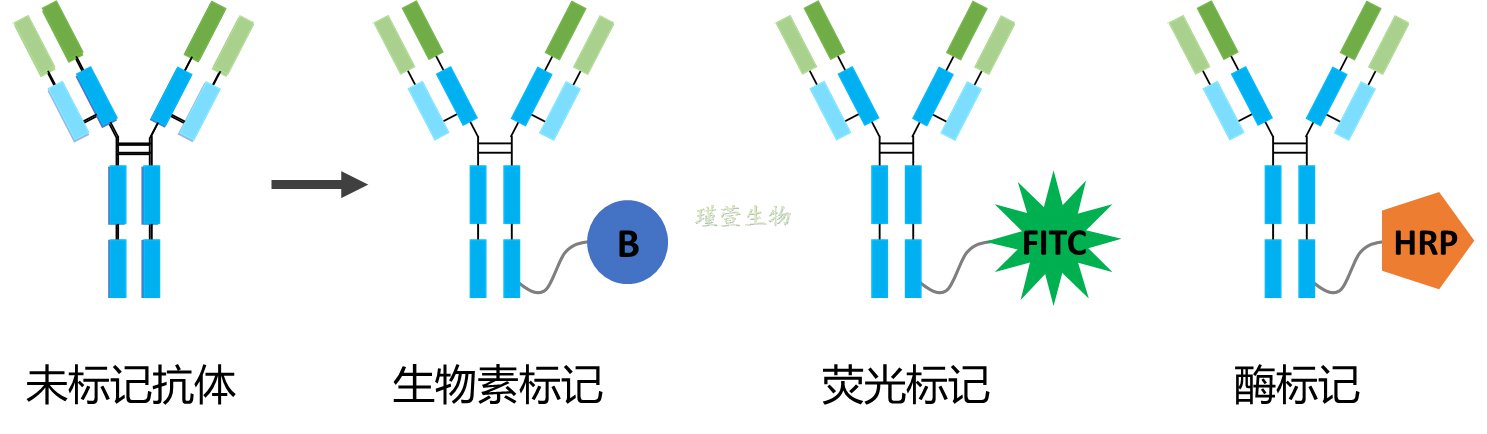
Our company provides protein labeling services for peptides, antigens, antibodies, and other proteins, including biotin labeling, fluorescent labeling, enzyme labeling, and other options.
II. Service Details
(1) Biotin Labeling
Biotin labeling reactions are simple, mild, and rarely inhibit antibody activity. Covalently conjugating biotin to antibodies is a very convenient and straightforward labeling method. Biotinylated antibodies can specifically bind to avidin and other binding partners, making them useful for antibody purification, immunohistochemistry, ELISA, and other applications.
(2) Fluorescent Labeling
A common fluorescent label is fluorescein isothiocyanate (FITC), which emits yellow-green fluorescence. When used with fluorescence microscopy, flow cytometry, and other instruments, FITC-labeled antibodies can be used for tracing, qualitative analysis, and quantitative analysis of corresponding antigens.
(3) Enzyme Labeling
Labeling antibodies with horseradish peroxidase (HRP) has become one of the most commonly used enzyme labeling methods in immunoassays based on antibody–antigen detection. HRP-labeled antibodies directly generate color changes, chemiluminescent signals, or fluorescent signals through the enzyme's specific catalysis of substrates, enabling qualitative and quantitative analysis of corresponding antigens. They are widely used in analytical methods such as WB, ELISA, and immunohistochemistry.


