

Recombinant Mouse PK3CA Protein
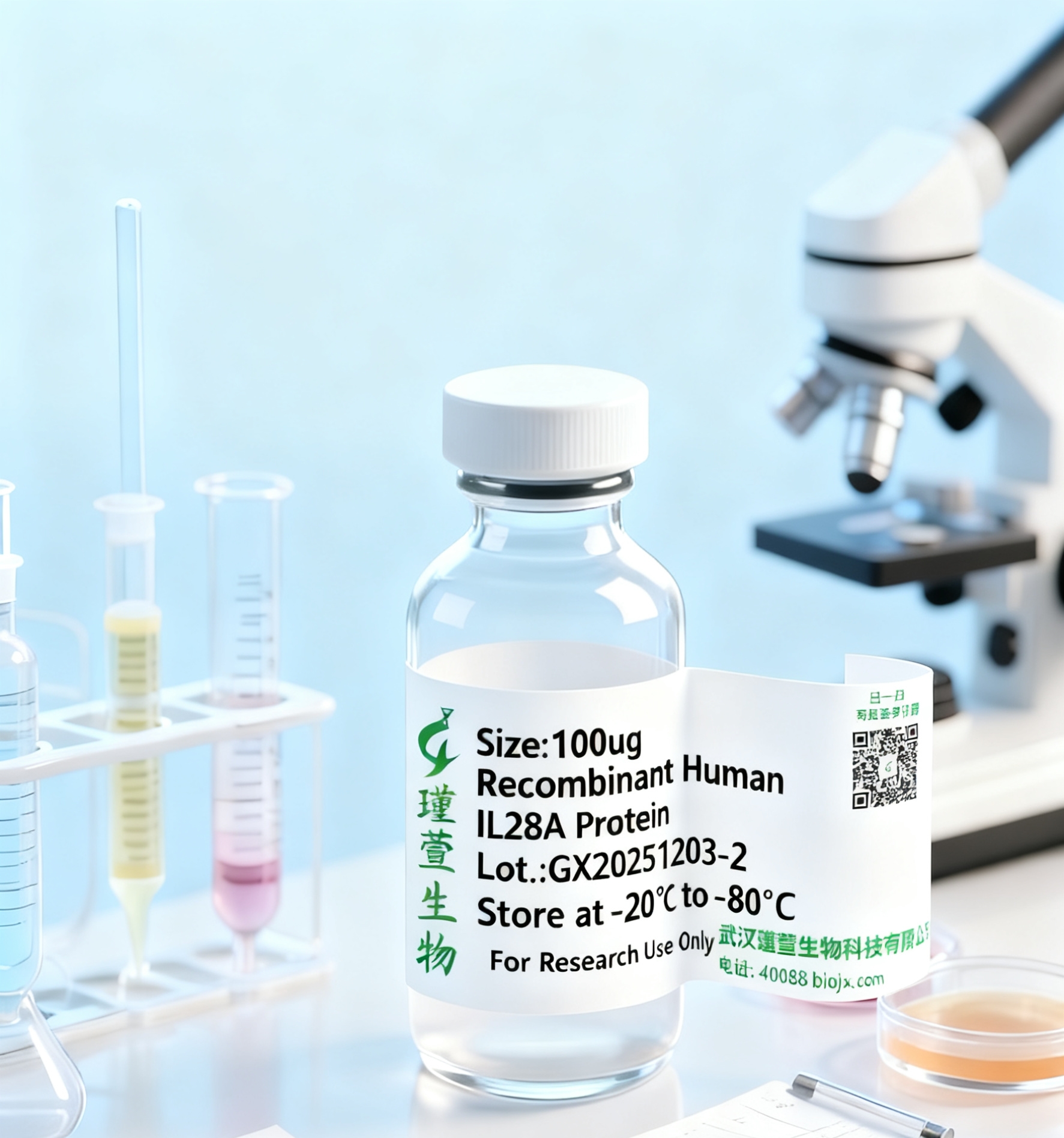
| 货号: | GXP51858 |
|---|---|
| Swiss Prot: | P42337 |
| 种属: | Mouse |
| 表达宿主: | E. Coli / 293F |
| 表达区间: | 1–1068aa |
| 标签: | Customize |
| 纯度: | >90% |
| 内毒素: | < 1.0 EU/μg / < 0.1 EU/μg |
价格:¥2580
货期:3-4周/weeks
规格:
说明书:
产品详情
| 产品名称: | Recombinant Mouse PK3CA Protein |
|---|---|
| 别名: | Pik3ca |
| 货号: | GXP51858 |
| Swiss Prot: | P42337 |
| 种属: | Mouse |
| 表达宿主: | E. Coli / 293F |
| 表达区间: | 1–1068aa |
| 标签: | Customize |
| 纯度: | >90% |
| 实际分子量: | Depends On Tags |
| 内毒素: | < 1.0 EU/μg / < 0.1 EU/μg |
| 无载体: | Yes |
| 无动物源: | Yes |
| 制剂: | Lyophilized from a 0.22 μm filtered solution of PBS, pH 7.4.Contact us for customized product form or formulation. |
| 描述: | Phosphoinositide-3-kinase (PI3K) phosphorylates phosphatidylinositol (PI) and its phosphorylated derivatives at position 3 of the inositol ring to produce 3-phosphoinositides. Uses ATP and PtdIns(4,5)P2 (phosphatidylinositol 4,5-bisphosphate) to generate phosphatidylinositol 3,4,5-trisphosphate (PIP3). PIP3 plays a key role by recruiting PH domain-containing proteins to the membrane, including AKT1 and PDPK1, activating signaling cascades involved in cell growth, survival, proliferation, motility and morphology. Participates in cellular signaling in response to various growth factors. Involved in the activation of AKT1 upon stimulation by receptor tyrosine kinases ligands such as EGF, insulin, IGF1, VEGFA and PDGF. Involved in signaling via insulin-receptor substrate (IRS) proteins. Essential in endothelial cell migration during vascular development through VEGFA signaling, possibly by regulating RhoA activity. Required for lymphatic vasculature development, possibly by binding to RAS and by activation by EGF and FGF2, but not by PDGF. Regulates invadopodia formation through the PDPK1-AKT1 pathway. Participates in cardiomyogenesis in embryonic stem cells through a AKT1 pathway. Participates in vasculogenesis in embryonic stem cells through PDK1 and protein kinase C pathway. Also has serine-protein kinase activity: phosphorylates PIK3R1 (p85alpha regulatory subunit), EIF4EBP1 and HRAS. Plays a role in the positive regulation of phagocytosis and pinocytosis (PubMed:19604150). {ECO:0000269|PubMed:16625210, ECO:0000269|PubMed:16647110, ECO:0000269|PubMed:17060635, ECO:0000269|PubMed:17540175, ECO:0000269|PubMed:18449193, ECO:0000269|PubMed:19604150, ECO:0000269|PubMed:21540297}. |
| 活性测试: | Not Test |
| 复溶: |
Centrifuge the vial before opening. Reconstitute to a concentration of 0.1-0.5 mg/mL in sterile distilled water. Avoid vortex or vigorously pipetting the protein. For long term storage, it is recommended to add a carrier protein or stablizer (e.g. 0.1% BSA, 5% HSA, 10% FBS or 5% Trehalose), and aliquot the reconstituted protein solution to minimize free-thaw cycles. 收到重组蛋白产品之后请检查蛋白冻干粉末是否贴于瓶底,如果粉末浮起,开盖之前请先低温离心。将蛋白用说明书中指定的缓冲液复溶至0.1-0.5 mg/mL(请注意蛋白复溶浓度不能低于0.1 mg/mL),室温平衡5-10 min保证充分溶解,复溶过程中请不要剧烈涡旋及吹打蛋白溶液。如需长期储存,建议复溶时添加载体蛋白或者稳定剂(如0.1% BSA, 5% HSA, 10% FBS 或者 5% 海藻糖),同时将复溶后的蛋白溶液按照需求进行分装,储存于-20°C至-80°C,随取随用,避免反复冻融。 |
| 储存: |
Store at -20℃.Store the lyophilized protein at -20℃ to -80 ℃ up to 1 year from the date of receipt. After reconstitution, the protein solution is stable at -20℃ for 3 months, at 2-8℃ for up to 1 week. 未开盖的干粉蛋白在 -20°C至-80°C可保存12个月; 复溶之后,蛋白溶液在-20°C及以下可保存3个月,在2-8℃可保存1周。 |


