


Recombinant Rat LOX5 Protein
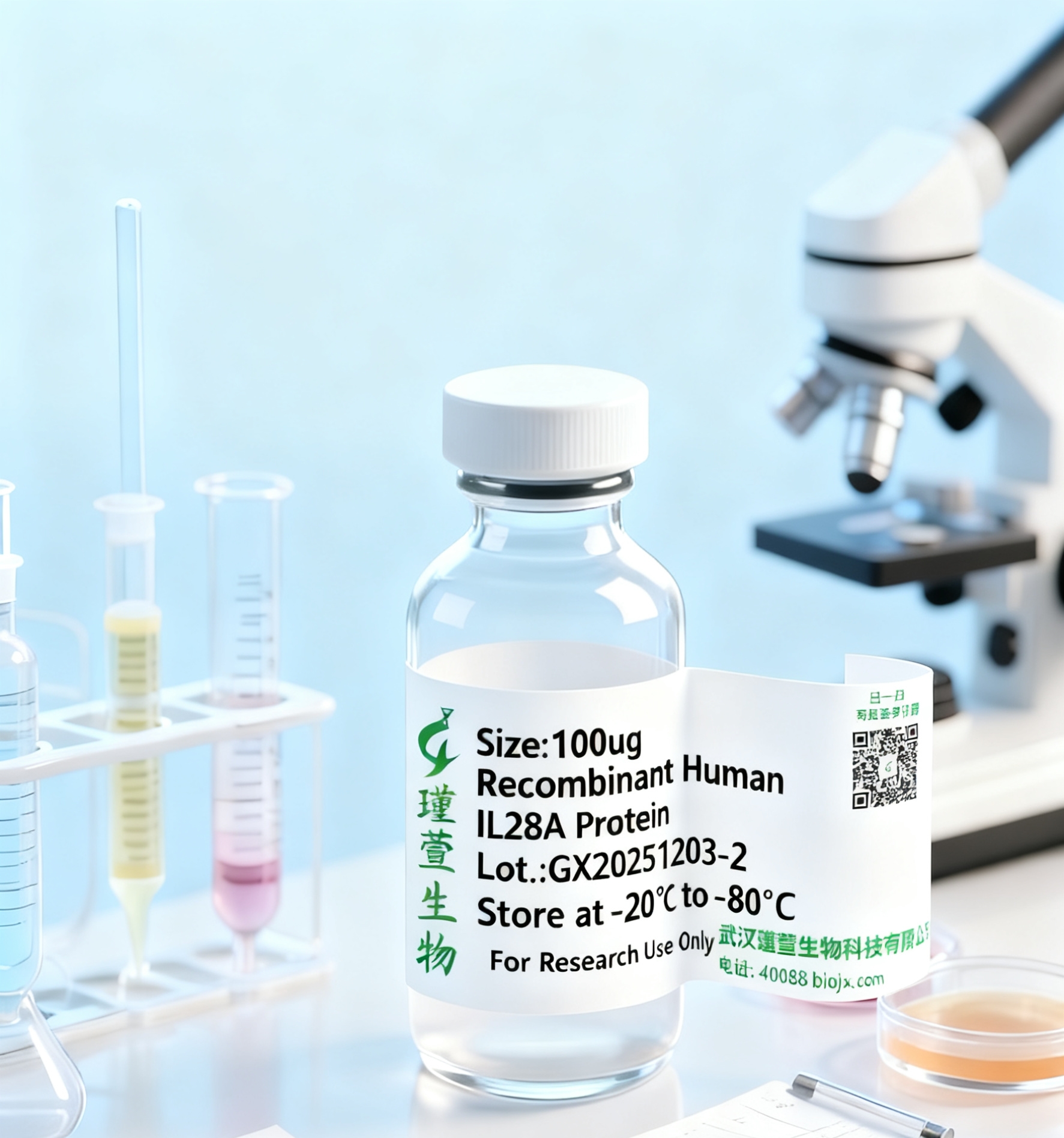
| Catalog Number: | GXP81032 |
|---|---|
| Swiss Prot: | P12527 |
| Species: | Rat |
| Expression System: | E. Coli / 293F |
| Sequence: | 1–673aa |
| Tag: | Customize |
| Purity: | >90% |
| Endotoxin: | < 1.0 EU/μg / < 0.1 EU/μg |
Price:¥2580
Delivery Time:3-4周/weeks
Specifications:
Manual:
Product Details
| Product Name: | Recombinant Rat LOX5 Protein |
|---|---|
| Synonyms: | Alox5 |
| Catalog Number: | GXP81032 |
| Swiss Prot: | P12527 |
| Species: | Rat |
| Expression System: | E. Coli / 293F |
| Sequence: | 1–673aa |
| Tag: | Customize |
| Purity: | >90% |
| SDS Page: | Depends On Tags |
| Endotoxin: | < 1.0 EU/μg / < 0.1 EU/μg |
| Carrier Free: | Yes |
| Animal Free: | Yes |
| Formulation: | Lyophilized from a 0.22 μm filtered solution of PBS, pH 7.4.Contact us for customized product form or formulation. |
| 描述: | Catalyzes the oxygenation of arachidonate to 5-hydroperoxyeicosatetraenoate (5-HPETE) followed by the dehydration to 5,6- epoxyeicosatetraenoate (Leukotriene A4/LTA4), the first two steps in the biosynthesis of leukotrienes, which are potent mediators of inflammation. Also catalyzes the oxygenation of arachidonate into 8-hydroperoxyicosatetraenoate (8-HPETE) and 12-hydroperoxyicosatetraenoate (12-HPETE). Displays lipoxin synthase activity being able to convert (15S)-HETE into a conjugate tetraene. Although arachidonate is the preferred substrate, this enzyme can also metabolize oxidized fatty acids derived from arachidonate such as (15S)-HETE, eicosapentaenoate (EPA) such as (18R)- and (18S)-HEPE or docosahexaenoate (DHA) which lead to the formation of specialized pro-resolving mediators (SPM) lipoxin and resolvins E and D respectively, therefore it participates in anti-inflammatory responses (By similarity). Oxidation of DHA directly inhibits endothelial cell proliferation and sprouting angiogenesis via peroxisome proliferator-activated receptor gamma (PPARgamma). It does not catalyze the oxygenation of linoleic acid and does not convert (5S)-HETE to lipoxin isomers. In addition to inflammatory processes, it participates in dendritic cell migration, wound healing through an antioxidant mechanism based on heme oxygenase-1 (HO-1) regulation expression, monocyte adhesion to the endothelium via ITGAM expression on monocytes. Moreover, it helps establish an adaptive humoral immunity by regulating primary resting B cells and follicular helper T cells and participates in the CD40-induced production of reactive oxygen species (ROS) after CD40 ligation in B cells through interaction with PIK3R1 that bridges ALOX5 with CD40. May also play a role in glucose homeostasis, regulation of insulin secretion and palmitic acid-induced insulin resistance via AMPK. Can regulate bone mineralization and fat cell differentiation increases in induced pluripotent stem cells (By similarity). {ECO:0000250|UniProtKB:P09917, ECO:0000250|UniProtKB:P48999}. |
| Activity: | Not Test |
| Reconstitution: |
Centrifuge the vial before opening. Reconstitute to a concentration of 0.1-0.5 mg/mL in sterile distilled water. Avoid vortex or vigorously pipetting the protein. For long term storage, it is recommended to add a carrier protein or stablizer (e.g. 0.1% BSA, 5% HSA, 10% FBS or 5% Trehalose), and aliquot the reconstituted protein solution to minimize free-thaw cycles. 收到重组蛋白产品之后请检查蛋白冻干粉末是否贴于瓶底,如果粉末浮起,开盖之前请先低温离心。将蛋白用说明书中指定的缓冲液复溶至0.1-0.5 mg/mL(请注意蛋白复溶浓度不能低于0.1 mg/mL),室温平衡5-10 min保证充分溶解,复溶过程中请不要剧烈涡旋及吹打蛋白溶液。如需长期储存,建议复溶时添加载体蛋白或者稳定剂(如0.1% BSA, 5% HSA, 10% FBS 或者 5% 海藻糖),同时将复溶后的蛋白溶液按照需求进行分装,储存于-20°C至-80°C,随取随用,避免反复冻融。 |
| Storage: |
Store at -20℃.Store the lyophilized protein at -20℃ to -80 ℃ up to 1 year from the date of receipt. After reconstitution, the protein solution is stable at -20℃ for 3 months, at 2-8℃ for up to 1 week. 未开盖的干粉蛋白在 -20°C至-80°C可保存12个月; 复溶之后,蛋白溶液在-20°C及以下可保存3个月,在2-8℃可保存1周。 |


