

Recombinant Mouse GPR37 Protein
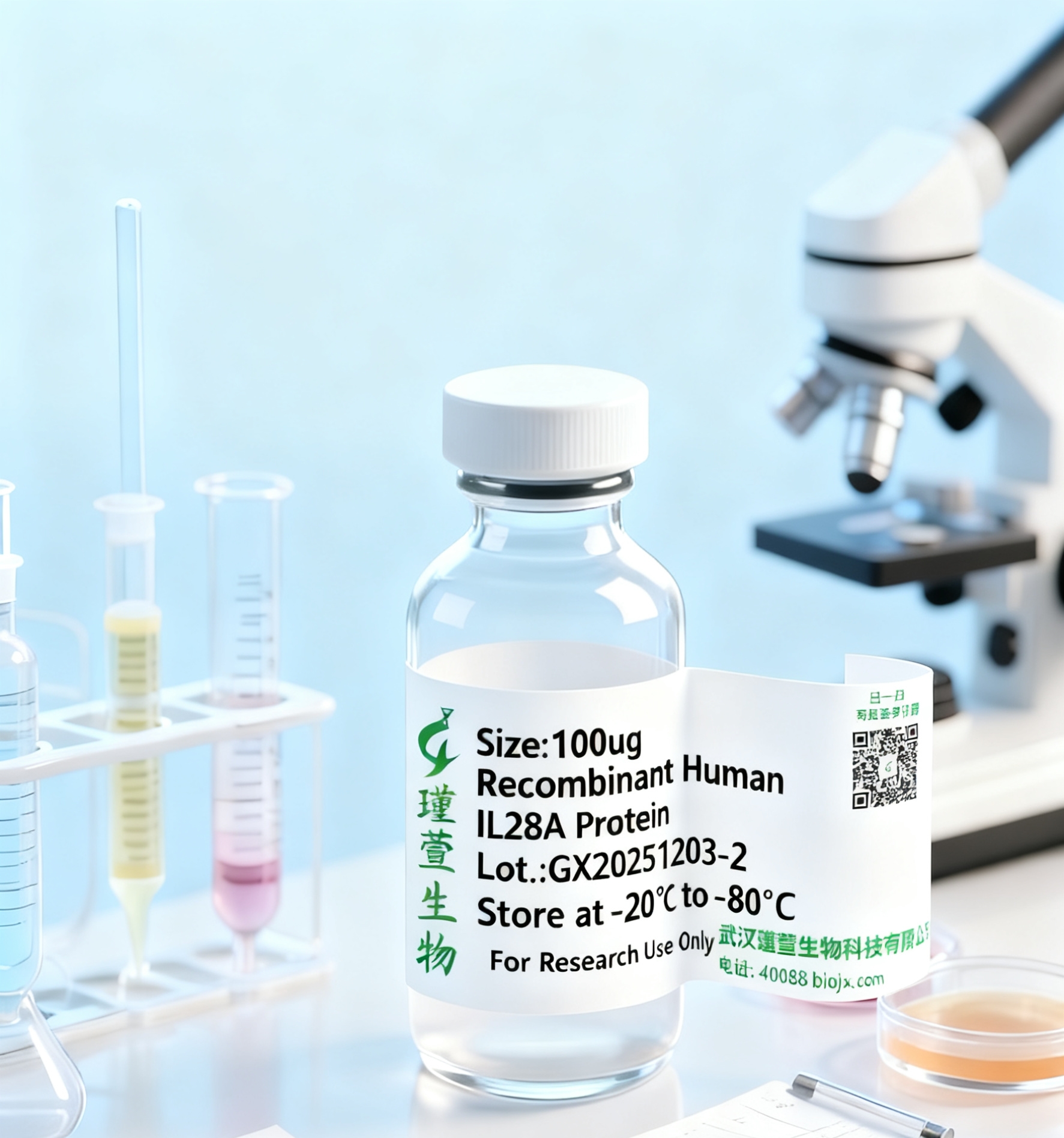
| 货号: | GXP57947 |
|---|---|
| Swiss Prot: | Q9QY42 |
| 种属: | Mouse |
| 表达宿主: | E. Coli / 293F |
| 表达区间: | 27–600aa |
| 标签: | Customize |
| 纯度: | >90% |
| 内毒素: | < 1.0 EU/μg / < 0.1 EU/μg |
价格:¥2580
货期:3-4周/weeks
规格:
说明书:
产品详情
| 产品名称: | Recombinant Mouse GPR37 Protein |
|---|---|
| 别名: | Gpr37 |
| 货号: | GXP57947 |
| Swiss Prot: | Q9QY42 |
| 种属: | Mouse |
| 表达宿主: | E. Coli / 293F |
| 表达区间: | 27–600aa |
| 标签: | Customize |
| 纯度: | >90% |
| 实际分子量: | Depends On Tags |
| 内毒素: | < 1.0 EU/μg / < 0.1 EU/μg |
| 无载体: | Yes |
| 无动物源: | Yes |
| 制剂: | Lyophilized from a 0.22 μm filtered solution of PBS, pH 7.4.Contact us for customized product form or formulation. |
| 描述: | G-protein-coupled receptor that plays a role in several physiological pathways such as resolution of inflammatory pain and oligodendrocyte differentiation (PubMed:26961174, PubMed:28642167, PubMed:30010619). Acts as a receptor for several ligands including prosaposin, osteocalcin or neuroprotectin D1. Ligand binding induces endocytosis, followed by an ERK phosphorylation cascade (By similarity). Acts as a receptor for osteocalcin (OCN) to regulate oligodendrocyte differentiation and central nervous system myelination (PubMed:34678058). Mechanistically, plays a negative role in oligodendrocyte differentiation and myelination during development via activation of the ERK1/2 signaling pathway (PubMed:26961174). Therefore, regulates the stability of myelin or resistance of myelin itself to demyelination (PubMed:28642167). Upon activation by neuroprotectin D1 (NPD1), promotes the activation of phagocytosis in macrophages as well as the shift in cytokine release toward an anti-inflammatory profile, and thus helps to reverse inflammatory pain (PubMed:30010619). In addition, the increased macrophage phagocytosis mediates protection against sepsis upon pathogen infection (PubMed:33731716). Additionally, extracellular vesicles derived from efferocyte express prosaposin, which binds to macrophage GPR37 to increase expression of the efferocytosis receptor TIM4 via an ERK-AP1-dependent signaling axis, leading to increased macrophage efferocytosis efficiency and accelerated resolution of inflammation (PubMed:37436891). May also act as a maturation factor of LRP6, protecting LRP6 from the endoplasmic reticulum (ER)-associated protein degradation (ERAD) and thereby promoting the Wnt/beta-catenin signaling pathway (By similarity). {ECO:0000250|UniProtKB:O15354, ECO:0000269|PubMed:26961174, ECO:0000269|PubMed:28642167, ECO:0000269|PubMed:30010619, ECO:0000269|PubMed:33731716, ECO:0000269|PubMed:34678058, ECO:0000269|PubMed:37436891}. |
| 活性测试: | Not Test |
| 复溶: |
Centrifuge the vial before opening. Reconstitute to a concentration of 0.1-0.5 mg/mL in sterile distilled water. Avoid vortex or vigorously pipetting the protein. For long term storage, it is recommended to add a carrier protein or stablizer (e.g. 0.1% BSA, 5% HSA, 10% FBS or 5% Trehalose), and aliquot the reconstituted protein solution to minimize free-thaw cycles. 收到重组蛋白产品之后请检查蛋白冻干粉末是否贴于瓶底,如果粉末浮起,开盖之前请先低温离心。将蛋白用说明书中指定的缓冲液复溶至0.1-0.5 mg/mL(请注意蛋白复溶浓度不能低于0.1 mg/mL),室温平衡5-10 min保证充分溶解,复溶过程中请不要剧烈涡旋及吹打蛋白溶液。如需长期储存,建议复溶时添加载体蛋白或者稳定剂(如0.1% BSA, 5% HSA, 10% FBS 或者 5% 海藻糖),同时将复溶后的蛋白溶液按照需求进行分装,储存于-20°C至-80°C,随取随用,避免反复冻融。 |
| 储存: |
Store at -20℃.Store the lyophilized protein at -20℃ to -80 ℃ up to 1 year from the date of receipt. After reconstitution, the protein solution is stable at -20℃ for 3 months, at 2-8℃ for up to 1 week. 未开盖的干粉蛋白在 -20°C至-80°C可保存12个月; 复溶之后,蛋白溶液在-20°C及以下可保存3个月,在2-8℃可保存1周。 |


