


Recombinant Mouse CP26C Protein
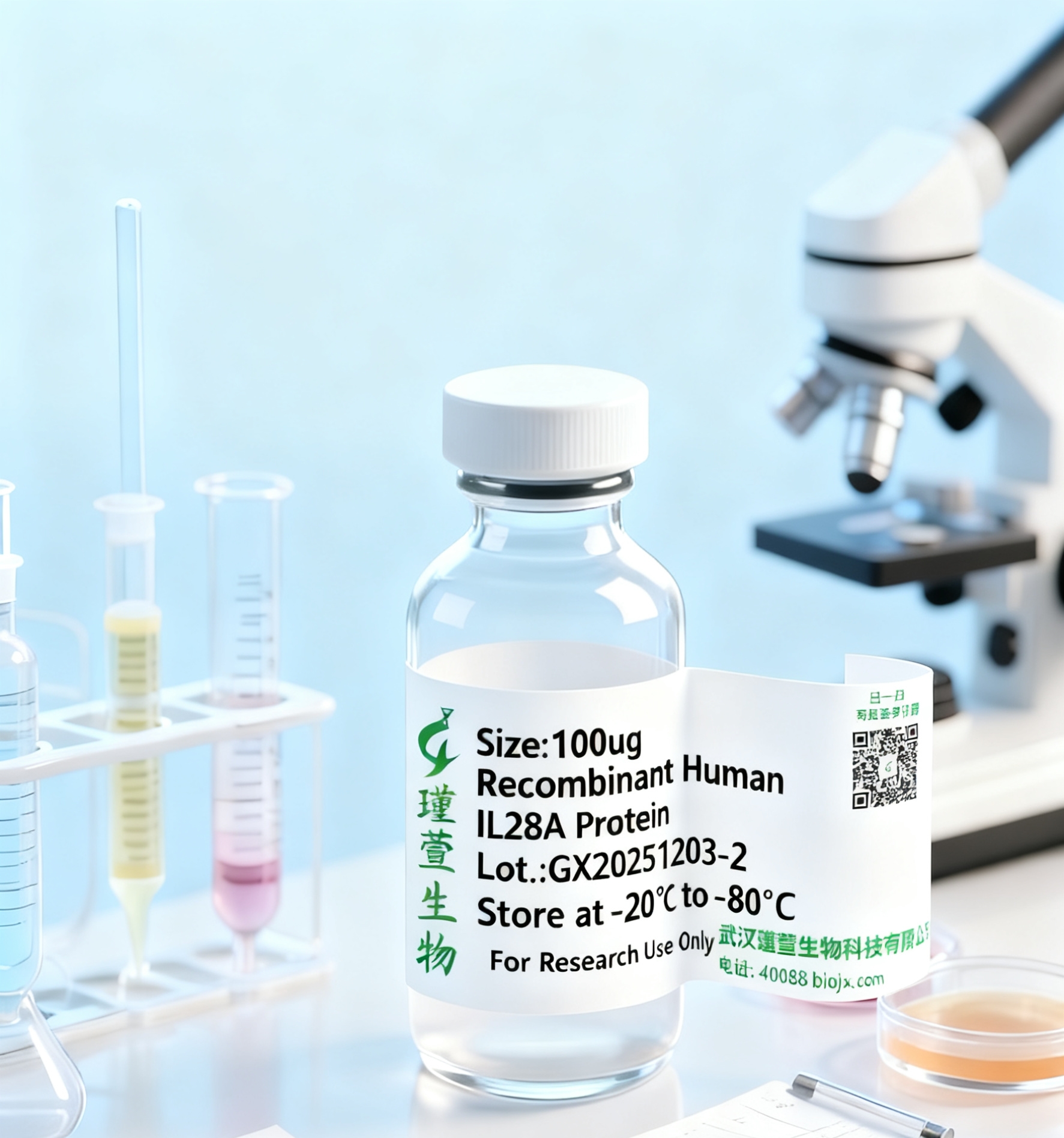
| Catalog Number: | GXP50203 |
|---|---|
| Swiss Prot: | B2RXA7 |
| Species: | Mouse |
| Expression System: | E. Coli / 293F |
| Sequence: | 1–518aa |
| Tag: | Customize |
| Purity: | >90% |
| Endotoxin: | < 1.0 EU/μg / < 0.1 EU/μg |
Price:¥2580
Delivery Time:3-4周/weeks
Specifications:
Manual:
Product Details
| Product Name: | Recombinant Mouse CP26C Protein |
|---|---|
| Synonyms: | Cyp26c1 |
| Catalog Number: | GXP50203 |
| Swiss Prot: | B2RXA7 |
| Species: | Mouse |
| Expression System: | E. Coli / 293F |
| Sequence: | 1–518aa |
| Tag: | Customize |
| Purity: | >90% |
| SDS Page: | Depends On Tags |
| Endotoxin: | < 1.0 EU/μg / < 0.1 EU/μg |
| Carrier Free: | Yes |
| Animal Free: | Yes |
| Formulation: | Lyophilized from a 0.22 μm filtered solution of PBS, pH 7.4.Contact us for customized product form or formulation. |
| 描述: | A cytochrome P450 monooxygenase involved in the metabolism of retinoates (RAs), the active metabolites of vitamin A, and critical signaling molecules in animals (Probable) (PubMed:15911617). RAs exist as at least four different isomers: all-trans-RA (atRA), 9-cis-RA, 13-cis-RA, and 9,13-dicis-RA, where atRA is considered to be the biologically active isomer, although 9-cis-RA and 13-cis-RA also have activity (Probable). Catalyzes the oxidation of atRA primarily at C-4 (Probable). Oxidation of atRA limits its biological activity and initiates a degradative process leading to its eventual elimination, thereby contributes to the regulation of atRA homeostasis and signaling. Able to metabolize other RAs such as 9-cis with high efficiency (By similarity). Can oxidize all-trans-13,14-dihydroretinoate (DRA) to metabolites which could include all-trans-4-oxo-DRA, all-trans-4-hydroxy-DRA, all-trans-5,8-epoxy-DRA, and all-trans-18-hydroxy-DRA (Probable). Shares sequence similarity with other CYP26 family members, but has higher affinity to 9-cis-RA and is much less sensitive to the inhibitory effects of ketoconazole (By similarity). In cooperation with Cyp26a1, contributes to the CNS patterning and the development of regions of higher visual acuity (PubMed:15531370, PubMed:17067568). {ECO:0000250|UniProtKB:Q6V0L0, ECO:0000269|PubMed:15531370, ECO:0000269|PubMed:15911617, ECO:0000269|PubMed:17067568, ECO:0000305|PubMed:12915310, ECO:0000305|PubMed:15531370, ECO:0000305|PubMed:15872003, ECO:0000305|PubMed:15911617}. |
| Activity: | Not Test |
| Reconstitution: |
Centrifuge the vial before opening. Reconstitute to a concentration of 0.1-0.5 mg/mL in sterile distilled water. Avoid vortex or vigorously pipetting the protein. For long term storage, it is recommended to add a carrier protein or stablizer (e.g. 0.1% BSA, 5% HSA, 10% FBS or 5% Trehalose), and aliquot the reconstituted protein solution to minimize free-thaw cycles. 收到重组蛋白产品之后请检查蛋白冻干粉末是否贴于瓶底,如果粉末浮起,开盖之前请先低温离心。将蛋白用说明书中指定的缓冲液复溶至0.1-0.5 mg/mL(请注意蛋白复溶浓度不能低于0.1 mg/mL),室温平衡5-10 min保证充分溶解,复溶过程中请不要剧烈涡旋及吹打蛋白溶液。如需长期储存,建议复溶时添加载体蛋白或者稳定剂(如0.1% BSA, 5% HSA, 10% FBS 或者 5% 海藻糖),同时将复溶后的蛋白溶液按照需求进行分装,储存于-20°C至-80°C,随取随用,避免反复冻融。 |
| Storage: |
Store at -20℃.Store the lyophilized protein at -20℃ to -80 ℃ up to 1 year from the date of receipt. After reconstitution, the protein solution is stable at -20℃ for 3 months, at 2-8℃ for up to 1 week. 未开盖的干粉蛋白在 -20°C至-80°C可保存12个月; 复溶之后,蛋白溶液在-20°C及以下可保存3个月,在2-8℃可保存1周。 |


